 RB News World Latest News

Related Articles



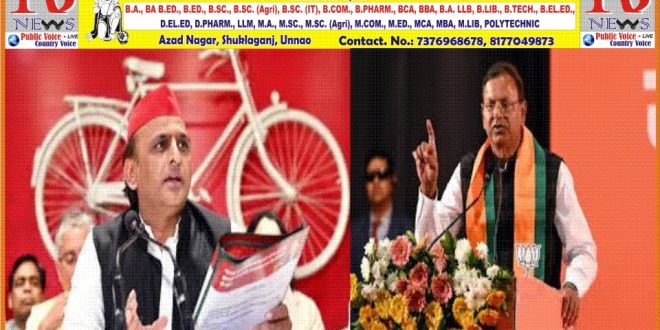
The upcoming Uttar Pradesh Assembly elections are poised to be highly interesting. After the recent Bihar Assembly elections, all eyes will be on Uttar Pradesh, especially on caste-based constituencies. This is because the BJP has appointed Union Minister of State for Finance Pankaj Chaudhary, who belongs to the Kurmi community, as the president of the Uttar Pradesh BJP.
This is being seen as a counter to Akhilesh Yadav’s PDA (Public Declaration of Backward Classes, Dalits, and Minorities) formula. However, the Samajwadi Party appears confident about this move and believes that it will continue to follow the same strategy as the 2024 Lok Sabha elections in 2027, as its hold on the Kurmi vote bank remains strong.
The BJP’s move and the SP’s confidence
This organizational decision by the BJP was seen in political circles as an attempt to balance the caste system. While top Samajwadi Party leaders argue that the Kurmi community certainly plays a decisive role in Uttar Pradesh politics, it has not shifted overwhelmingly towards the BJP.
The SP leadership believes that the results of the 2024 Lok Sabha elections clearly demonstrated the party’s continued acceptance among Kurmi voters. With this confidence, the SP is indicating that it will adopt the same formula for candidate selection and regional balance that strengthened it in the 2027 assembly elections.
Preparations for 2027 and Lessons Learned from Bihar
The 2027 assembly elections in Uttar Pradesh may still be far away, but political parties have already begun preparing. While the Congress appears sluggish in its state organization and, despite its defeat in the Bihar assembly elections, is continuing to push the issue of Rahul Gandhi’s vote theft.
Meanwhile, the Samajwadi Party has begun to sharpen its strategy. According to Jagran, an SP MP stated that while there are some similarities in the social structure of Uttar Pradesh and Bihar, the political battles are completely different. He believes that in Bihar, coordination among opposition parties was weak and there was a clear lack of ground preparation, while the SP is in no mood to repeat this mistake in Uttar Pradesh.
Booth-Level Strategy and the Kurmi Equation
The Samajwadi Party has decided to monitor every vote at the booth level, not just limiting itself to opposition politics. This work is underway in earnest, and the organization is being activated at the grassroots level. A senior SP leader and MP from the Kurmi community explains that in the 2022 assembly elections, a total of around 40 Kurmi MLAs were elected, including 27 from the BJP, 12 from the SP, and one from the Congress.
Despite this, the SP won 37 out of 80 seats in the 2024 Lok Sabha elections. A total of 15 MPs were elected from the Kurmi community, including 11 from the SP, three from the BJP, and one from the Apna Dal. The SP estimates that these figures demonstrate that despite the BJP having more MLAs, the SP’s hold on the Kurmi community remains strong. Based on this, the party plans to challenge BJP President Pankaj Chaudhary through influential Kurmi leaders within his own area of influence. For this, candidates will soon be shortlisted according to caste equations, so that the stage for 2027 can be set with a well-planned move in time.